
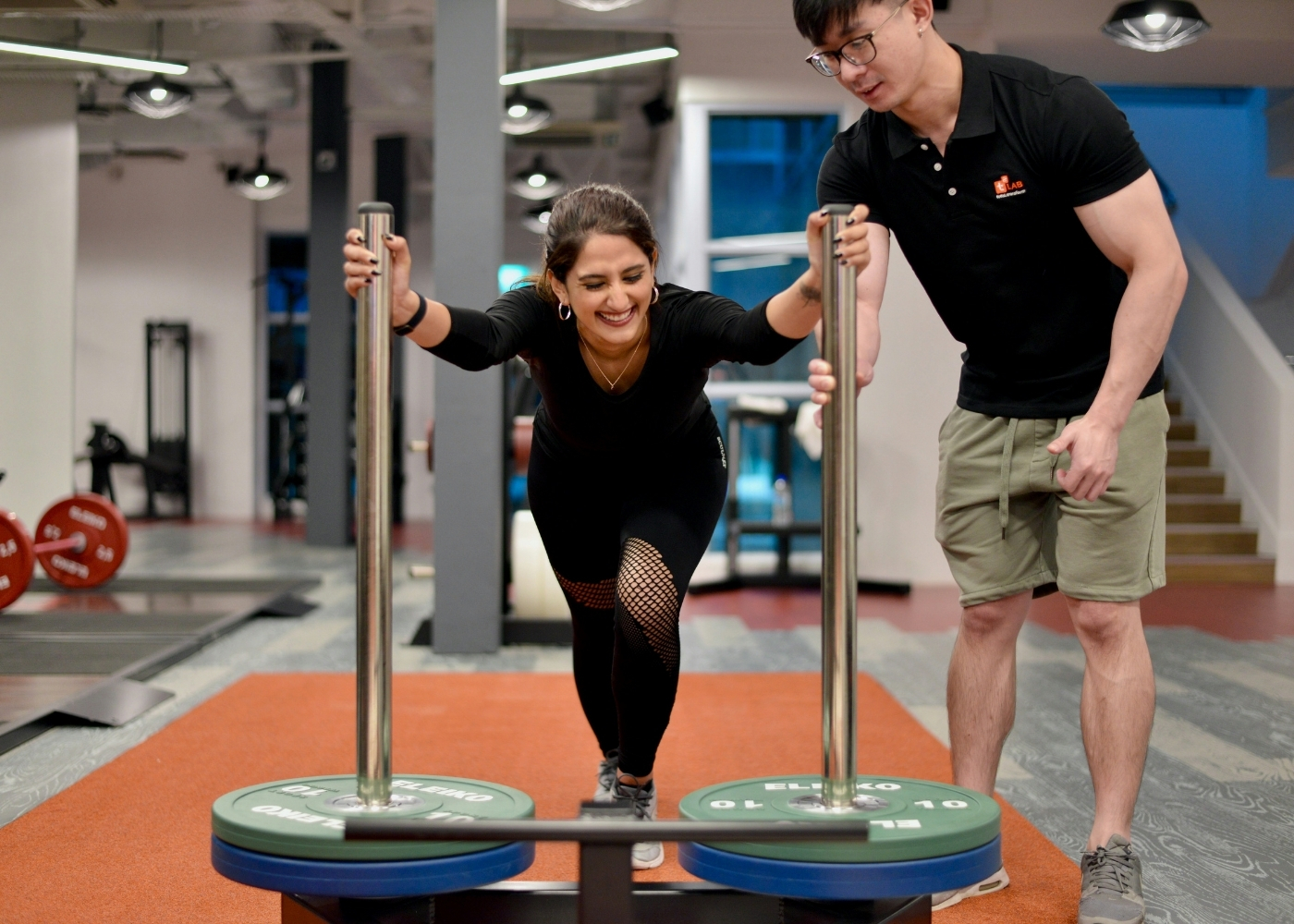
The Singapore fitness training industry contains two very different professional experiences that share the same job title. The first is the gym-employed trainer, operating within an institutional framework with guaranteed client referrals, structured working hours, and an employment contract that provides income security in exchange for a percentage of session revenue. The second is the independent fitness trainer, operating as a business owner who manages every dimension of their professional practice from client acquisition to service delivery to financial administration. Singapore’s most commercially successful independent fitness trainer singapore professionals have developed business structures and operational approaches that produce income levels and professional autonomy that employment cannot match, but the path to that position is more complex than the independence appeal suggests.
The Legal and Structural Foundation
Singapore provides a straightforward environment for independent fitness trainers to establish legitimate business structures, and the choice of structure has meaningful implications for taxation, liability, and professional credibility.
Sole Proprietorship vs Private Limited Company
Most independent fitness trainers in Singapore begin as sole proprietors, which is the simplest business structure requiring only registration with ACRA and offering immediate operational simplicity. Sole proprietorship income is taxed as personal income at the individual’s marginal tax rate, which is efficient at lower income levels but becomes increasingly disadvantageous as revenue grows beyond the sixty to eighty thousand dollar annual range where corporate tax rates begin to offer advantages.
The private limited company structure, which requires slightly more administrative complexity including annual financial statement preparation and corporate secretary appointment, provides several advantages for higher-revenue independent trainers. Corporate income is taxed at seventeen percent flat rate with generous start-up exemptions, which is more favourable than the upper personal income tax bands for profitable operations. The company structure also provides limited liability protection that the sole proprietor structure does not, which is commercially relevant for trainers delivering services with physical risk exposure.
GST Registration Considerations
Independent fitness trainers in Singapore are required to register for GST when their annual revenue exceeds the GST registration threshold. Registration adds administrative complexity but also signals business scale to corporate clients who require GST invoicing for their own accounting purposes. Some independent trainers register voluntarily before reaching the threshold specifically to access input tax credits on business expenses and to present a more established business image to commercial clients.
Client Acquisition Architecture
Revenue sustainability for independent Singapore fitness trainers depends on client acquisition systems that produce a steady flow of new clients as existing clients complete their engagement or reduce their session frequency.
Referral System Development
The most cost-efficient client acquisition channel for established independent trainers in Singapore is structured referral from existing satisfied clients. Unlike passive word-of-mouth referrals, which occur unpredictably, a structured referral system creates deliberate mechanisms that prompt referral behaviour at the moments when clients are most likely to make recommendations.
The most effective referral triggers for Singapore fitness trainers include the milestone moment when a client achieves a meaningful goal, the point at which a new client’s results become visible to their social network, and the period immediately after a client has made a particularly positive comment about their training experience in a session. Trainers who develop conversational fluency in requesting referrals at these moments generate substantially more referred business than those who wait passively for referrals to occur.
Corporate Client Development
Corporate clients represent a commercially attractive segment for Singapore’s independent fitness trainers because they produce higher revenue per relationship than individual clients, generate multiple individual session clients from a single corporate relationship, and have more predictable renewal patterns than individual client relationships.
True Fitness Singapore provides independent trainers who operate within its facilities with the institutional infrastructure, brand association, and client base access that accelerates business development beyond what independent operation in a commercial space provides. True Fitness Singapore creates a professional environment where independent trainers can build sustainable practices with the support of a premium institutional context.
FAQs
Q. – I am considering leaving my gym employment to become an independent fitness trainer in Singapore. What financial reserve should I have before making the transition?
Ans. – Most business advisors recommend a minimum of six months of personal living expenses as a financial reserve before transitioning from employment to independent business operation. For fitness trainers specifically, building a client base of ten to fifteen committed weekly training clients before leaving employment, ideally developed through part-time independent work within allowed employment terms, provides revenue continuity that reduces the financial risk of the transition significantly. Attempting the transition without both financial reserve and a pre-built client base produces the financial stress that causes many capable trainers to return to employment before their independent practice reaches sustainability.
Q. – How do successful independent fitness trainers in Singapore manage the income variability that comes with client churn and seasonal fluctuations?
Ans. – The most effective management strategies include structuring client engagements as monthly or quarterly training packages rather than individual session purchases, which smooths revenue by reducing the frequency of re-selling decisions; maintaining a client waitlist to fill immediate vacancies from churn; building a savings buffer of two to three months of business operating costs from periods of higher revenue to cover lower-revenue months; and developing passive or semi-passive income streams including online programmes, group training, or digital content that produce revenue independently of active session delivery.
Q. – What insurance coverage should an independent fitness trainer in Singapore have?
Ans. – Professional indemnity insurance covering claims arising from professional advice and programme design decisions is the primary coverage requirement. Public liability insurance covering physical injury to clients during training sessions is equally important. Some trainers also carry business interruption insurance that provides income replacement during periods when injury or illness prevents service delivery. Premiums for appropriate coverage are a modest operating expense relative to the financial exposure of operating without it, and clients increasingly ask about insurance as a due diligence step before engaging independent trainers.
Q. – How do independent fitness trainers in Singapore typically handle taxation of training income?
Ans. – Sole proprietors declare fitness training income as business income on their personal income tax return, deducting allowable business expenses including equipment, continuing education, professional development, platform subscriptions, and a proportionate allocation of any home office costs. Private limited company structures file corporate tax returns separately from personal income tax, with trainer compensation drawn as director fees or salary that is deducted as a business expense at the company level. Engaging a Singapore-qualified accountant familiar with service business taxation from the first year of independent operation prevents the compounding administrative problems that DIY tax management creates.
Q. – Is it realistic to build a six-figure independent fitness training business in Singapore?
Ans. – Yes, and a meaningful number of Singapore’s established independent fitness trainers operate at this revenue level. The pathway typically involves three to five years of client base building, service offering development, and business system establishment before revenue reaches this level consistently. Trainers who reach six-figure revenue combine high per-session pricing justified by demonstrated expertise and results, efficient session scheduling that maximises billable hours, corporate client relationships that provide bulk revenue, and supplementary revenue streams from group training, online programmes, or content that do not require one-to-one session time. The ceiling is determined more by business structure and service design than by market demand.
